
By Makhanabazar Editorial Team | Published October 19, 2026 | 7 min read
Union Minister of Commerce and Industry Piyush Goyal has said that Bihar's GI-tagged Mithila Makhana is winning hearts worldwide, highlighting its nutritional benefits, versatility and growing international reach. In a social media post, Goyal described Mithila Makhana as a superfood and credited farmers for their contribution to its growing popularity, while emphasising the government's efforts to take Bihar's local products to international markets.
What is Mithila Makhana?
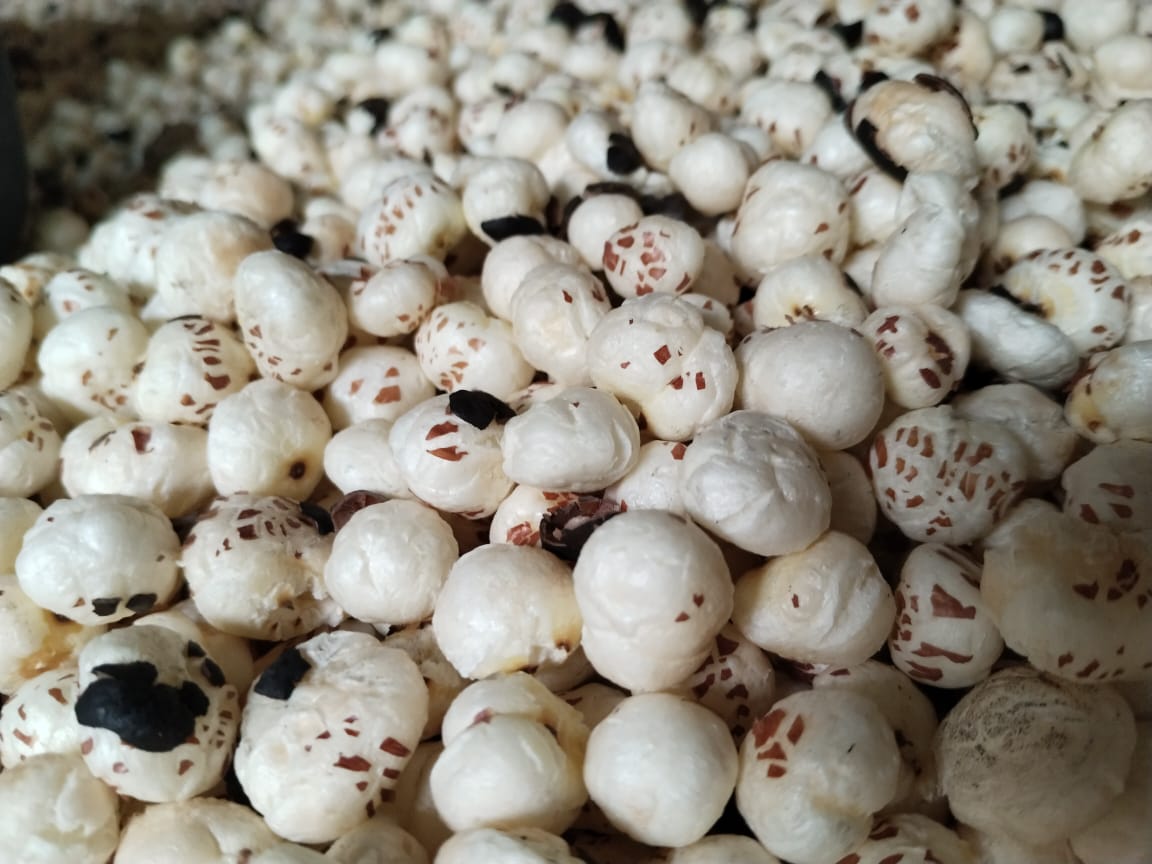
Makhana, scientifically known as Euryale ferox, is an aquatic crop grown mainly in shallow ponds, lakes and wetlands. Its seeds are processed, roasted or popped to produce the edible fox nuts commonly consumed as a snack. The Mithila region of Bihar, where the crop has been traditionally cultivated for generations, holds a Geographical Indication (GI) tag that protects and promotes the authenticity of this regional product.
India's Record Export Growth
According to Ministry of Commerce data, India exported more than 7,000 metric tonnes of makhana and value-added makhana products to over 20 international destinations during FY 2025-26. These markets include the United States, the Middle East and Africa — a clear signal that demand for the "world's oldest superfood" is no longer limited to South Asian diaspora communities.
| Export Metric | FY 2025-26 |
|---|---|
| Makhana & value-added products exported | 7,000+ metric tonnes |
| International destinations | 20+ |
| Key markets | USA, Middle East, Africa |
| Bihar's share of India's production | ~85% |
Why Bihar Leads Makhana Production
Bihar accounts for nearly 85 per cent of India's total makhana production, making it the country's leading production centre for the crop. India itself is the world's largest producer of makhana, with cultivation concentrated mainly in Bihar, West Bengal and Assam. The product has expanded well beyond its traditional consumption in Bihar, supported by growing health awareness, startups developing value-added products, and the increasing involvement of Farmer-Producer Organisations (FPOs).
A Separate HS Code for Makhana
To strengthen the sector, a separate Harmonised System (HS) code for makhana came into effect in July 2025 under the Finance Bill, 2025. The separate classification provides a distinct trade code for the product — a critical step for exporters because it gives makhana its own identity in customs documentation, streamlines trade data, and removes the ambiguity of shipping under a generic "other nuts" classification. For exporters, a dedicated HS code also improves traceability and credibility with international customs authorities.
National Makhana Board
The government has also taken concrete steps to modernise the sector. The National Makhana Board was announced in the Union Budget 2025-26 and formally launched in Bihar on September 15, 2025. The Board is a dedicated institutional body for makhana policy, production planning, research coordination and export promotion — giving the crop a unified national push rather than piecemeal state-level efforts.
The Rs 476.03 Crore Development Scheme
Additionally, the government has approved a Central Sector Scheme for the Development of Makhana with a total outlay of Rs 476.03 crore for 2025-26 to 2030-31. Under the scheme, Rs 30 crore was approved for 2025-26 and Rs 90 crore for 2026-27. The scheme aims to:
- Support research and innovation in makhana cultivation and processing
- Improve the availability of quality seeds
- Strengthen farmers' skills
- Upgrade harvesting and post-harvest practices
- Promote value addition and branding
- Expand marketing and exports
- Improve quality control
What This Means for International Buyers
For importers and private label brands, this is a watershed moment. A dedicated HS code, an institutional Board, and a multi-crore development scheme mean the supply of export-grade makhana will become more consistent, better quality-controlled, and more professional at scale. As the sector formalises, buyers in the USA, UAE, UK and Middle East can expect stronger documentation, more traceable supply chains and growing value-added product ranges.
Frequently Asked Questions
What does GI tag on Mithila Makhana mean?
The Geographical Indication (GI) tag certifies that Mithila Makhana originates from the Mithila region of Bihar and meets specific regional quality and authenticity standards. It protects the traditional product from misuse and gives producers, including exporters, a recognised mark of regional origin.
How much makhana does India export?
According to Ministry of Commerce data, India exported more than 7,000 metric tonnes of makhana and value-added makhana products to over 20 international destinations during FY 2025-26, including the USA, the Middle East and Africa.
When did the separate HS code for makhana come into effect?
A separate Harmonised System (HS) code for makhana came into effect in July 2025 under the Finance Bill, 2025, giving the product a distinct trade classification for customs and export documentation.
What is the National Makhana Board?
Announced in the Union Budget 2025-26 and formally launched in Bihar on September 15, 2025, the National Makhana Board is a central institution coordinating makhana policy, production planning, research and export promotion.