The global health food market is projected to surpass $1 trillion by 2027, and Indian makhana (fox nuts) is emerging as one of the most promising superfoods in this wave. At Makhanabazar, we have seen a 40% increase in export inquiries from the USA, UAE, and European markets in the first half of 2026 alone. Here is what is driving this trend and what it means for bulk buyers and private label brands.
Why Makhana Is Gaining Global Traction
Makhana offers a rare combination of attributes that modern consumers demand:
- Plant-based protein — 9g per 100g, making it ideal for vegan and vegetarian markets
- Low glycemic index — suitable for diabetic-friendly product lines
- Naturally gluten-free — aligns with free-from trends in North America and Europe
- Clean label friendly — no artificial additives, just roasted or raw makhana
- Long shelf life — 12+ months when properly packaged, reducing retail waste
Key Export Markets in 2026
United States
The US remains the largest growth market. Health-conscious consumers in cities like New York, Los Angeles, and Chicago are discovering makhana through Indian grocery chains, specialty health stores, and online marketplaces. Private label brands are now launching makhana snack packs in resealable pouches, targeting the $4.2B healthy snack segment. Key buying patterns include:
- Container loads (20ft FCL) of raw makhana for domestic roasting and packaging
- Private label orders with custom flavoring and packaging (MOQ: 5,000 units)
- Organic-certified makhana for premium retail chains like Whole Foods and Sprouts
UAE & Middle East
The UAE, particularly Dubai, serves as a re-export hub for the entire GCC region. Indian makhana is finding strong demand among the large South Asian expatriate community and increasingly among health-conscious Arab consumers. Key trends:
- Flavored makhana (Peri-Peri, Cream & Onion, Mix Masala) performing well in UAE retail
- Demand for premium gift packaging during Ramadan and festive seasons
- Jebel Ali port re-export to Saudi Arabia, Oman, Kuwait, and Bahrain
Europe (UK, Germany, Netherlands)
European buyers are driven by the clean-label and plant-based movements. The UK leads in retail adoption, while Germany shows strong B2B demand from food manufacturers using makhana as an ingredient in:
- Granola and trail mix blends
- Plant-based protein bars
- Breakfast cereals and muesli
- Restaurant garnishes and health bowls
What Buyers Should Look for in a Makhana Supplier
Not all makhana is equal. Serious buyers should verify:
- Grade consistency — Hand Picked (A1), Large (A2), and Small (A3) grades should be clearly separated
- FSSAI and ISO certifications — mandatory for food safety compliance in most markets
- Customs documentation — phytosanitary certificates, certificate of origin, and fumigation reports
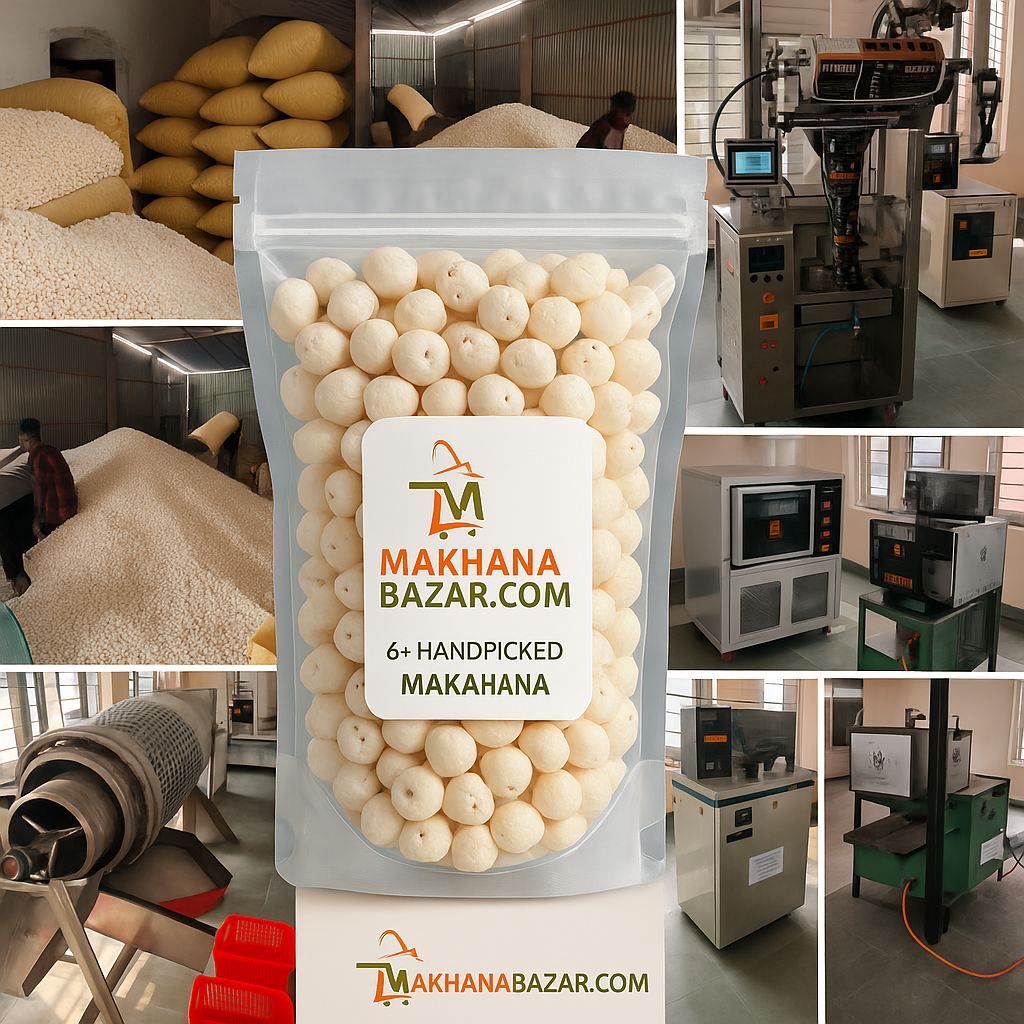
- Packaging capabilities — ability to do private labeling, custom weights, and retail-ready packaging
- Reliable shipping terms — FOB, CIF, and DDP options with transparent lead times
Makhana Pricing Outlook for H2 2026
After a stable Q1-Q2, raw makhana prices are expected to firm up slightly in the second half due to:
- Increased global demand outpacing current processing capacity
- Monsoon season affecting harvest yields in Bihar (July-September)
- Rising freight costs on key shipping routes
Recommendation: Bulk buyers should consider locking in Q3-Q4 contracts now while prices remain favorable.
How Makhanabazar Supports Export Buyers
As a direct manufacturer and exporter from Bihar, Makhanabazar offers:
- Complete export documentation and customs support
- Private labeling in 8+ languages for international markets
- Flexible MOQs — from sample orders to full container loads
- Quality grading with pre-shipment inspection reports
- FOB Nhava Sheva and CIF major ports worldwide
Ready to Source Premium Indian Makhana?
Get a free quote with pricing, MOQ, and shipping details tailored to your market.
Request Export Quote Contact Sales Team